Tuesday, February 24, 2015

Surveillance in Bangladesh - Legal challenge to surveillance laws withdrawn unexpectedly

This is the fifth in the series of articles on surveillance in Bangladesh.

The other articles published by New Age can be found here:


----------------------------
Legal challenge to surveillance laws withdrawn unexpectedly

David Bergman

A High Court public interest writ challenging the constitutionality of legal provisions which introduced widespread phone surveillance in the country was unexpectedly withdrawn a year after the court had issued an order asking the government to set out why the provisions should not be set aside.

The order, passed in May 2006 by Justice Md Awlas Ali and Justice Zinat Ara asked the government why the law ‘should not be declared to be ultra vires, void and without legal authority and … of no legal effect.’

However, four months after a state of emergency was declared, and before the government responded to the court order, the petition was withdrawn without any reason given.

Md Assaduzzaman, the lawyer for the petitioners told New Age that, ‘I went to court in April 2007 to withdrawal the writ petition after receiving instructions from my client not to continue with the case.’

Surveillance in Bangladesh - Telecom operators retain 6 months of SMS, other info, for law enforcers

This is the third in the series of articles published in New Age about surveillance. This was originally published on 16 February 2015. 

You can access all five of the articles from this page
-------------------
Telecom operators retain 6 months of SMS, other info, for law enforcers 
David Bergman 
Bangladesh’s six mobile phone operators are required to keep copies of all SMS messages sent by their subscribers for at least six months so they can be easily accessed by intelligence and law enforcement agencies, New Age has learnt.
In addition, the operators keep all ‘Call Related Information’, which includes details of all calls to and from a mobile phone, including the geo-location of the phone when the conversation took place.
‘We are required to keep this information according to the terms of our operating licence … At present we are required to keep SMS’s for six months,’ Nurul Kabir, the secretary general and chief executive officer of the Association of Mobile Telecom Operators of Bangladesh told New Age.
‘After six months the information becomes difficult to retrieve. The operators have it in backup servers, and can pull it off, but it can be difficult,’ he said.

Surveillance in Bangladesh - Phone operators pay for govt’s surveillance system upgrade

This is the third in the series of articles published in New Age about surveillance. This was originally published on 15 February 2015. 

You can access all five of the articles from this page
---------------------------

Phone operators pay for govt’s surveillance system upgrade 
David Bergman

The country’s six mobile phone companies have paid for a multi-million dollar ‘upgrade’ to the government’s mobile phone surveillance system which allows intelligence and law enforcement authorities to directly record thousands of ongoing mobile phone conversations, New Age has learnt.
The upgrade, which will also allow greater access to mobile phone messages sent through e-mails and social networking sites, is being provided by the German company, Trovicor, one of the world’s leading suppliers of high end surveillance equipment and monitoring centres.
New Age has been told that the phone operators between them paid 20.1 million euros (Tk18.5 crore) for the upgrade – with the larger phone operators companies paying a larger share than the smaller ones.
Nurul Kabir, the secretary general and chief executive officer of the Association of Mobile Telecom Operators of Bangladesh told New Age that the mobile phone operators had to pay for the surveillance system as it was ‘part of their license conditions’.

Surveillance in Bangladesh - RAB seeking purchase of mobile phone spy tool

This is the second in the series of reports published in New Age about surveillance in Bangladesh. This was originally published on 2 November 2014

You can access all five of the articles from this page
-------------------------
RAB seeking to purchase powerful mobile phone spy tool 
David Bergman

The Rapid Action Battalion is seeking to purchase a powerful mobile spy tool which can obtain details of all mobile phone numbers operating in a particular locality, according to a UK based privacy right organisation, Privacy International, which has published a copy of the procurement document on its website.
Known as an ‘IMSI catcher’, the equipment masquerades as a mobile phone base station and logs the telephone numbers of all the mobile phones in a particular area.
‘[IMSI] Catchers allow [law enforcement authorities] to indiscriminately gather data from thousands of mobile phones in a specific area and at public events such as political demonstrations,’ the Privacy International website states.
IMSI stands for International Mobile Subscriber Information.
The international non-governmental organisation is lobbying the Swiss government authorities to prevent a company, NeoSoft, from exporting the surveillance equipment to Bangladesh so that, ‘RAB’s capacity to engage in indiscriminate violence’ is not ‘augmented with indiscriminate surveillance technology.’
‘Such a technology in the hands of an agency as reportedly unaccountable as the RAB is extremely concerning,’ it said.

Surveillance in Bangladesh - Govt purchased Tk 8.2cr software to spy on private computers

This is the first in the series of articles published in New Age about surveillance. This was originally published on 1 November 2014.

You can access all five of the articles from this page
Govt purchased Tk 8.2cr software to spy on private computers 
David Bergman 
The government has purchased surveillance software from a private European company which allows the country’s intelligence and law enforcement bodies to remotely intercept audio, video and written communications from privately owned computers, Wikileaks has revealed.
According to confidential records and information, leaked from the company and published last month on the Wikileaks website, the Bangladesh government has since December 2012 paid €831,060 (Tk 8.2 crore) to the German company FinFisher to purchase this ‘surveillance malware’.
The website does not state which particular Bangladesh law enforcement body or intelligence agency purchased the licenses, but the company only sells this software to government agencies.
According to the records, the main software license purchased by the Bangladesh authorities is called ‘FinSpy’.

Monday, February 23, 2015

Political Crisis 2015 - Why the UN and the West must share the blame

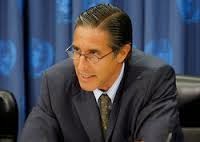
Oscar Fernandez-Taranco, UN Asst Sec Gen in
Bangladesh, December 2013
See also in the 'Political Crisis 2015' series:
Analysis of the deaths (updated to 5 Feb)


This is my op-ed in today's New Age looking at the responsibility of the United Nations and the West for the current political quagmire - in their failure to make sure that the Awami League government followed through with its clear commitment to them, during and after the UN envoys's visit to Bangladesh in December 2013, to hold a dialogue and elections after the 5 January 'constitutionally-required' election

UN, west must share blame for Bangladesh crisis 
by David Bergman 
In conversations that took place in the weeks before the country’s January 2014 election, United States diplomats warned Indian government officials that their support for uncontested elections in Bangladesh would store up trouble for the future.
Events unfolding now in Bangladesh suggest that — at least on this point — the United States was spot on.
Even those who think that the Awami League did nothing wrong in holding the elections without the Bangladesh Nationalist Party’s participation must acknowledge that the country is now reaping the consequences of an election in which only the Awami League and its allied parties took part, leaving over half of the country disenfranchised.
Principal responsibility for this situation lies with the Awami League — if only because it started the ball rolling by unilaterally removing the election-time caretaker-government provisions from the constitution.
But the BNP must also take its fair share of blame for failing to respond to overtures from the Awami League for a compromise.
But what about the so-called ‘international community’?
Before the election, the vast majority of the international community (composed of the United Nations, and ‘western’ countries) were all pushing hard for an agreement between the two political parties and so carry no blame for the January 5 elections.
To the extent that the international community helped Bangladesh in going ahead with the one-sided elections, it was India and Russia that must shoulder responsibility.
However, when one considers why, a year on from the elections, Bangladesh, is in such a quagmire, the United Nations and western countries are far from blameless.
Although in the days after January 5, they all issued strongly worded statements criticising the elections, these international actors quickly became content with the status quo and took no concerted action to press for new elections.
Let us first look at the United Nations.
In December 2013, the UN secretary general sent Oscar Fernandez-Taranco to Dhaka to try to facilitate dialogue between the country’s two main parties and broker some kind of political deal.
The details of the meetings are not fully known, but diplomats confirm that the Awami League negotiators told Taranco that the holding of the January 5 elections was simply a ‘constitutional necessity’ and that immediately after the poll the party would initiate talks with the BNP to discuss holding a new election. This was a commitment given not just to the United Nations but to other diplomats.
The day after the elections, the United Nations issued a statement in which the secretary general ‘regretted that the parties did not reach the kind of agreements which could have produced a peaceful, all-inclusive election outcome… [and] called on the political parties to resume meaningful dialogue and to urgently address the expectations of the people of Bangladesh for an inclusive political process.’
This is a strong statement, and presumably written with Awami League’s commitments to Taranco in mind..
Did the United Nations do anything to make this happen, to ensure that the Awami League government followed through on its commitment? According to one diplomat, some ‘desultory’ contacts between the United Nations and Bangladesh government officials did take place but ‘they certainly did not press.’
So having received a commitment from the Awami League to enter an immediate dialogue with the opposition concerning the holding of new elections, the United Nations did practically nothing to make sure it happened.
The United Nations made no further public statements calling for an election and there were no more visits from Taranco.
Next, let us look at the European Union.
A day after the United Nations posted its election statement, the EU’s high representative Catherine Ashton stated that the EU had ‘repeatedly called on all parties to create favourable conditions for transparent, inclusive and credible elections. The high representative, therefore, regrets the fact that such conditions did not materialise and that the people of Bangladesh were not given an opportunity to express fully their democratic choice.’
The EU statement asked the parties to ‘engage in genuine dialogue to agree on a mutually acceptable way forward to strengthen democratic accountability and to hold transparent, inclusive and credible elections, putting the interests of the people of Bangladesh first.’
What did they do after that? Apparently not very much. Perhaps, EU officials reminded the Bangladesh government of its commitment to hold a new election at various meetings, but nothing much else.
Significantly, the European Union had the option of considering the use of an important lever — threatening the temporary suspension of the country’s GSP facilities.
The EU’s GSP regulation states that ‘preferential arrangements… may be withdrawn temporarily’ if there has been ‘serious and systematic violation of principles laid down in any of the 27 listed United Nations and International Labour Organisation conventions.
Article 25 of the International Covenant on Civil and Political Rights, one of the listed conventions states, ‘Every citizen shall have the right and the opportunity… without unreasonable restrictions… to vote… at genuine periodic elections… guaranteeing the free expression of the will of the electors.’
A ‘General Comment’ published by UN’s monitoring UN Human Rights Committee states that the right to vote ‘lies at the core of democratic government based on the consent of the people’ and that states must take steps to ensure that ‘citizens have an effective opportunity to enjoy’ it.
It adds that ‘Genuine periodic elections… are essential to ensure the accountability of representatives for the exercise of the legislative or executive powers vested in them’ and are required to ensure that ‘the authority of government continues to be based on the free expression of the will of electors.’
Arguably, the elections in Bangladesh on January 5, particularly in the context of a broken government commitment to hold dialogue with the opposition allowed the EU to use its lever.
There were certainly grounds for the EU to consider that the elections were in breach of this international standard; voters in 153 out of 300 constituencies had no opportunity to vote; in most of the other 147 seats, voters had to choose between candidates from the same party alliance; and there was a low turnout, in some constituencies only 10 per cent.
However, not many weeks after the election, the EU clarified that it would not use this lever, and that it was in fact ‘business as usual’ with the Bangladesh government.
Other individual government’s also made strong statements after the election — and then did practically nothing.
Australian’s government’s minister for foreign affairs Julie Bishop stated, ‘It is vital that the people of Bangladesh are able to express their democratic will and exercise real choice. The government and the opposition must take up their shared responsibility to hold a new, fully contested and transparent election as soon as possible.’
Canadian’s foreign minister John Baird ‘urge[d] all parties to reach an agreement soon that would allow the next election to be truly participatory, with results that all Bangladeshis will see as credible.’
The Federal Republic of Germany stated that ‘These elections are an extremely poor reflection of the electorate’s will’ and ‘urge[d] the Bangladesh government and all political parties to overcome their differences in the interest of the country and to work together to bring about inclusive, peaceful and credible democratic elections.’
The French government called ‘on all parties to… encourage the main political forces to resume dialogue within the framework of the country’s democratic institutions.’
And Kamalesh Sharma, representing all Commonwealth countries stated: ‘[I]t is critical that Bangladesh moves quickly to find a path forward through dialogue to a more inclusive and peaceful political process in which the will of the people can be fully expressed.’
Whatever action these countries took to pressure the government, it was very limited indeed.
One country, the United States did take more steps in trying to keep the pressure on the Awami League government. After issuing a strongly worded statement — calling on the parties to ‘engage in immediate dialogue to find a way to hold as soon as possible elections that are free, fair, peaceful, and credible, reflecting the will of the Bangladeshi people’, it specifically called for elections to take place by June 2014. And, alone amongst all the countries it kept up the pressure for some months But for sometime now the United States has been toeing the same line taken by the rest of the international community so that the recent press statement given by the United States’s new ambassador to Bangladesh, Marcia Bernicat did not even mention the word ‘elections’.
The failure of the United Nations and independent states to apply concerted pressure on the Awami League government forcing it to act on its commitment to the United Nations in holding new elections is a significant factor explaining why Bangladesh is in the current quagmire.
Why then did the international community not do more?
One reason is that it has allowed India to dictate international policy towards Bangladesh. This is most obvious in relation to the United States, which has a strategic alliance with India (where India insists on dictating policy towards Bangladesh), but it also informs the way other countries view the country.
Another reason is a concern about the involvement of the Jamaat-e-Islami in the main opposition alliance.
Whilst countries are critical of many aspects of the Awami League government, they have greater concerns about the election of a government comprising an Islamic fundamentalist party. Whilst they would have preferred that proper elections had taken place in 2013, they are uncertain about pushing for an election which could result in a BNP-Jamaat government.
Thirdly, the international community thinks it has limited levers — and the levers that they do have, to be ‘too big’. For the EU to play its GSP card, without the government succumbing to the pressure, could create a huge risk to the economy, diplomats say. And for the United Nations to play its peace keeping card — threatening the removal of Bangladesh army perks — would not necessarily result in the elections that are being sought, and would in any case be difficult for the United Nations at a time when it needs Bangladeshi army peacekeepers.
And finally, the countries had another justification for not acting — the lack of an apparent popular ‘movement’ against the elections. Though, the lack of any ‘movement’ was principally due to the BNP calling off its protest on the basis of the Awami League’s commitment to holding new elections!
Bangladesh right now is far from being the first country to have suffered due to international ‘realpolitik’. But that is certainly what has happened over the past year — and as a result, in allowing the Awami League government to simply consolidate coercive power after the elections, and in failing to press systematically for new elections, the United Nations and western countries must share significant responsibility over the country’s current crisis.
David Bergman is a contributing special correspondent at New Age.

Sunday, February 22, 2015

Political Crisis 2015 - the US shift on Bangladesh

Ambassador Bernicat's press conference, Feb 2015
See also in the 'Political Crisis 2015' series:
Analysis of the deaths (updated to 5 Feb)


How much can change in a year?

The day after the 5 January 2014 elections, the US statement Marie Harf, the State Department's Deputy Spokesperson, issued a statement which made the US government's position very clear - There must be new elections. It read:
The United States is disappointed by the recent Parliamentary elections in Bangladesh. With more than half of the seats uncontested and most of the remainder offering only token opposition, the results of the just-concluded elections do not appear to credibly express the will of the Bangladeshi people. 
While it remains to be seen what form the new government will take, United States commitment to supporting the people of Bangladesh remains undiminished. To that end, we encourage the Government of Bangladesh and opposition parties to engage in immediate dialogue to find a way to hold as soon as possible elections that are free, fair, peaceful, and credible, reflecting the will of the Bangladeshi people.

Thursday, February 12, 2015

Political crisis 2015 - UN gingerly puts its toe in the water

See also in the 'Political Crisis 2015' series:
Analysis of the deaths (updated to 5 Feb)


Amongst all the other major crises in the world, perhaps the UN is - finally - recognizing that Bangladesh could well join them.

On the 11th February (Wednesday, US time), Stéphane Dujarric, Spokesman for the Secretary-General was asked a question about Bangladesh, and she said this
…. the [former] Assistant Secretary‑General in charge of [Political Affairs] Oscar Fernández-Taranco has been tasked by the Secretary‑General to liaise with the Government and he's doing just that.
It also emerged that Taranco was meeting that afternoon with Nisha Biswal, the US Assistant Secretary of State for South and Central Asia, though it was not confirmed whether or not Bangladesh was on the agenda.

See below for the whole question and answer.

It is not much - and it is notable that the spokesperson does not mention that he is in 'liaison' with the opposition - but it is a start, and it does seem to be a development from what was said by the UN spokesperson on 5 Febuary (see end of post). Taranco, as many will remember, came to Bangladesh in December 2013 before the 5 January elections to try to work out a compromise between the parties.

The visit by UN Assist Secretary General has taken place. Taranco succeeded in getting BNP and AL leaders to meet three times - but there have been no substantive gains from this process, no deal anywhere near the horizon. However, the establishment of new lines of communication may well help in the future and could (after the 5 January elections) be helpful for getting new negotiations started between the parties. However, those hoping for any deal before 5 January 2014 - should just stop hoping!
Well, I did not think then it would take quite so long for Taranco to reappear on the scene

Tuesday, February 10, 2015

Political conflict 2015 - 'Economic basis to conflict'


See also in the 'Political Crisis 2015' series:
Analysis of the deaths (updated to 5 Feb)


In December 2014, before the explosion of violence in Bangladesh, BRAC University's Institute of Governance Studies organized an international conference on 'Political Economy, Accountability and Governance'

At one of the very early sessions, the economist Professor Mushtaq Khan, based at London's SOAS gave a short response to a couple of papers looking at the relationship between governance and economic success (little relationship, they found).

Musthtaq Khan is one of the most interesting and insightful thinkers on Bangladesh (indeed someone said of Mushtaq that 'in full flow [he] is a thing of beauty"!) and I mention him now as in his short comments at an early session of the conference he referred to the economic basis to the political conflict between the Awami League and the Bangladesh Nationalist Party (without referring to them by name).

And what he stated was rather prescient.

A transcript of what he said is set out below, but in summary  Mushtaq raised the question (as a hypothesis) about whether political stability in Bangladesh is dependent on the country's two corrupt political parties exchanging power every five years, as one party staying in power for any longer does not 'include enough people in its patronage structures …. In our kind of political settlement ... the only guarantee of political stability … is to give [all members of the elite] a chance "to eat".' The word "eat" here is of course used as a euphemism.

Political Crisis 2015 - 'It's the election, stupid'

See also in the 'Political Crisis 2015' series:
Analysis of the deaths (updated to 5 Feb)


This article was published in New Age on the 9 February.
It's the elections, stupid 
The most proper, obvious and urgent response to the current political crisis in Bangladesh is to condemn the violence. 
First, the murderous arson apparently undertaken mostly by opposition pickets, or their hired goons, which has killed more than 50 members of the public and seriously injured many others. And then, if you are fair minded, the apparently unlawful killings by the law enforcement authorities which number about 20 opposition activists or pickets. 
But then what?

Monday, February 9, 2015

Political crisis 2015 - 'International crisis group' report

See also in the 'Political Crisis 2015' series:
Analysis of the deaths (updated to 1 Feb)


An impressive and detailed analysis of Bangladesh's political situation has just been published by the International Crisis Group. Though it is primarily based on field research undertaken in August 2014, and deals with a wide range of issues including the International Crimes Tribunal, judiciary, and the media (which I will try and come back to in later posts), it also takes a view about the current political situation and here are some extracts from the introduction and the full conclusion. The full report is available here.

My only immediate comment on the report is that in its introduction it states that 'violent Islamist factions are already reviving'. We should certainly be very fearful of this if it was the case, but I wonder if such a revival is actually happening, though the current violent instability certainly provides fertile ground.
Introduction
…. Having boycotted the 2014 poll, the BNP appears bent on ousting the government via street power. With daily violence at the pre-election level, the political crisis is fast approaching the point of no return and could gravely destabilise Bangladesh unless the sides move urgently to reduce tensions. ..
With the two largest mainstream parties unwilling to work toward a new political compact that respects the rights of both opposition and victor to govern within the rule of law, extremists and criminal networks could exploit the resulting political void. Violent Islamist factions are already reviving, threatening the secular, democratic order. While jihadi forces see both parties as the main hurdle to the establishment of an Islamic order, the AL and the BNP perceive each other as the main adversary.

The AL and its leader, Prime Minister Sheikh Hasina Wajid, emphasise that the absence from parliament of former Prime Minister Khaleda Zia and her BNP make them political non-entities. Yet, concerned about a comeback, the government is attempting to forcibly neutralise the political opposition and stifle dissent, including by bringing corruption and other criminal cases against party leaders, among whom are Zia and her son and heir apparent, Tarique Rahman; heavy-handed use of police and paramilitary forces; and legislation and policies that undermine fundamental constitutional rights.

The BNP, which has not accepted any responsibility for the election-related violence in 2014 that left hundreds dead (and saw hundreds of Hindu homes and shops vandalised), is again attempting to oust the government by force, in alliance with the Jamaat-e-Islami, which is alleged to have committed some of the worst abuses during that period. The party retains its core supporters and seems to have successfully mobilised its activists on the streets. Yet, its sole demand – for a fresh election under a neutral caretaker – is too narrow to generate the public support it needs to over- come the disadvantage of being out of parliament, and its political capital is fading fast as it again resorts to violence.

The deep animosity and mistrust between leaders and parties were not inevitable. Despite a turbulent history, they earlier cooperated to end direct or indirect military rule and strengthen democracy, most recently during the 2007-2008 tenure of the military-backed caretaker government (CTG), when the high command tried to re- move both Sheikh Hasina and Khaleda Zia from politics. Rather than building on that cooperation, the two leaders have resorted to non-democratic methods to undermine  each other. In power, both have used centralised authority, a politicised judiciary and predatory law enforcement agencies against legitimate opposition. …. 
The AL needs to realise that the BNP’s marginalisation from mainstream politics could encourage anti-government activism to find more radical avenues, all the more so in light of its own increasingly authoritarian bent. Equally, the BNP would do well to abandon its alliances of convenience with violent Islamist groups and seek to revive agreement on a set of basic standards for multiparty democracy. A protracted and violent political crisis would leave Sheikh Hasina and Khaleda Zia the ultimate losers, particularly if a major breakdown of law and order were to encourage the military to intervene; though there is as yet no sign of that, history suggests it is an eventuality not to be dismissed. The opportunities for political reconciliation are fast diminishing, as political battle lines become ever more entrenched. Both parties should restrain their violent activist base and take practical steps to reduce political tensions:

 the AL government should commit to a non-repressive response to political dis- sent, rein in and ensure accountability for abuses committed by law enforcement entities, reverse measures that curb civil liberties and assertively protect minority communities against attack and dispossession of properties and businesses;

 the AL should invite the BNP, at lower levels of seniority if needed, to negotiations aimed at reviving the democratic rules of the game, including electoral reform. It should also hold mayoral elections in Dhaka, a long-overdue constitutional re- quirement that would provide opportunities to begin that dialogue; and

 the BNP should commit to non-violent political opposition; refrain from an alli- ance with the Jamaat-e-Islami that is enhancing the Islamist opposition’s street power with little political return for the BNP; and instead demonstrate willingness to engage in meaningful negotiations with the AL to end a crisis that is undermin- ing economic growth and threatening to subvert the political order. ...
Conclusion
In mid-2014, a retired senior military official predicted: “Unlike 2013, when we saw a steady build-up of a crisis, we could now see a sudden meltdown of law and order. It could take just one knock”.174 As the clashes that began in January 2015 escalate, Sheikh Hasina and Khaleda Zia should recognise that without constructive gestures that risk will increase, with both sides the ultimate losers. For this reason, it is in their interests to restrain their party activists, resume dialogue and, in the government’s case, rein back the law enforcement apparatus.

Sheikh Hasina’s efforts to win popularity via economic development or war crimes trials as her government stifles dissent might seem a good way to consolidate power. But they threaten the AL’s internal coherence, domestic stability and potentially the government’s future. A significant part of the electorate will continue to oppose the AL, and attempts to forcibly suppress opposition would exacerbate social and politi- cal divisions. Sheikh Hasina should also know that if she loses the next election, the tools her government uses against political opponents today (and that were put in place by prior BNP administrations) could be used against her party.175

The BNP’s many supporters again are being swayed by calls for hartals; another prolonged period of street clashes could either end, as the earlier one, with forceful suppression of protests, or result in a complete breakdown of law and order, possibly sparking military intervention. Neither outcome would help the BNP to revive its for- tunes. The party should instead reopen dialogue with the government if it is to regain the support of citizens suffering economically from the ongoing shutdown and con- cerned about growing political instability.

Both parties should urgently search for ways out of the impasse. Since some BNP leaders have appeared open to considering alternatives to the caretaker model,176 the government could revive its proposal for an all-party cabinet to oversee elections, with limited policy- and appointment-making powers and a strong election commis- sion. This would at the least present an opportunity to begin long-overdue negotia- tions for defusing political tensions. Much depends, however, on the willingness of both leaders to reach out to each other, instead of continuing to rely on undemocratic forces, including the security establishment, to quash dissent, or on violent street protests and dubious alliances with those on extremist fringes.

Saturday, February 7, 2015

Political crisis 2015 - Law enforcement 'unlawful killings'

See also in the 'Political Crisis 2015' series:
Analysis of the deaths (updated to 1 Feb)


This page provide more details on alleged 'unlawful killings' by the police since 5 January which appear to be directly connected with the political crisis.

Twenty such deaths have been identified from news reports (as of 7 Feb, 2014). 10 of the men killed are from the BNP; 7 are from the Jamaat and 3 are so far unidentified.

[To see the full list of deaths, including details of the over 40 deaths claimed to be the result of opposition pickets, click here]

The police provide six different scenarios for these 20 'police' deaths

- that 8 men were killed when the police came under attack

- that 4 men were killed when, having been arrested by the police, they were taken to a place to recover arms or identify other alleged associates, and in a course of a shoot out with that persons associate's that person is killed.

- that 4 men were killed in the course of a protest (in the first few days of the political unrest)

- that 2 men died when vehicle ran them over when men were throwing bombs (police claim they were not involved)

- that 1 man died when trying to escape police custody

- that 1 man died, police claim no responsibility, but family claim that he was in police custody.

All these deaths are set out below.

Wednesday, February 4, 2015

Political crisis 2015 - No clean hands

                                
See also in the 'Political Crisis 2015' series:
Analysis of the deaths (updated to 1 Feb)


There is only one truth when its comes to violent killings and Bangladesh politics. None of the country's two main political parties have clean hands.

Lets first consider the violence since 5January 2015.

By just about any definition of the crime,  the violence perpetrated by men throwing petrol bombs at vehicles around the country amounts not only to homicide but to the offence of terrorism.

It is violent conduct against a civilian population and seeks to influence the policy of a government – in this case to get it to hold elections. However legitimate many in the country may feel this demand to be, this does not excuse or justify the killings.

So Sheikh Hasina, and other members of her government are right when they decry as 'terrorism' the recent deaths of over 30 members of the public  – as indeed they had done about a similar number of deaths a year ago during the previous opposition protests before the 5 January 2014 election.

Tuesday, January 27, 2015

Political conflict 2015 - NSI estimate of opposition in protests

Khaleda Zia, leader of the BNP
and Sheikh Hasina, Prime minister

See also in the 'Political Crisis 2015' series:
Analysis of the deaths (updated to 27 Jan)


The text is missing.

Sunday, January 25, 2015

Political conflict 2015 - Understanding the crisis

Khaleda Zia, leader of the BNP
and Sheikh Hasina, Prime minister

See also in the 'Political Crisis 2015' series:
Analysis of the deaths (updated to 27 Jan)


By no means comprehensive, but here are eight points to understand the current crisis in Bangladesh and why it appears particularly intractable.

1. At its heart, this current conflict is about the legitimacy of the current government.
Although at the end of its five years in power, the Awami League government did in January 2014 hold elections, the lack of participation of the BNP opposition alliance (whether justified or not) meant that most Bangladeshis,  either had no opportunity to vote (as 153 seats were uncontested) or had no real choice if they wanted to vote for an alternative to the Awami League  As a result, although most people were simply pleased that the election ended the bitter and violent conflict of the previous months, and normal life was able to return, there remained concerns about the legitimacy of the election which have always remained bubbling under the surface.

By all accounts, in recognition of the concerns about the election's legitimacy, a senior Awami League adviser soon after the election suggested a plan to party leaders that it should start negotiations with the BNP,  move towards elections after a couple of years, and in the meantime govern the country so that it would win its support to allow victory at the poll. This plan, which had it been implemented would in all likelihood have avoided the current situation and could well have been a boon to the Awami League, was rejected. There was no further talk of interim elections, and rather that any dialogue with the BNP, there was a suppression of the party's basic political rights.

With an election lacking legitimacy, and a government seeking to prevent the BNP from organizing as a party, it was perhaps inevitable that the BNP, which can count on at least 30 to 35 percent of the vote, would at some point snap.

2. Why did the government barricade Zia and cancel the public meeting?
The immediate origin of the current conflict was the decision by the Awami League government to barricade the Bangladesh Nationalist party leader Khaleda Zia in her Gulshan party office on 3 January and the subsequent police’s refusal to allow the party to hold a public meeting in Dhaka. Why did the government do this?

The most likely explanation for this is that the government feared some kind of Tahrir square situation (which sparked the revolution in Egypt) - where tens or even hundreds of thousands of people would have attended the public meeting and not have moved from the centre of Dhaka. It was perhaps feared that Khaleda Zia might, for example, have called on those who attended the meeting to refuse to leave until the government agreed to elections or some other demand. The very different political protests in Shahbag in February 2013 (following the Quader Molla tribunal decision) and of Hefazet on 5 May 2013 were in their own ways examples of what the government wanted to avoid.

Therefore, whilst the government would have known that the barricading of Zia and the cancelling of the public meeting in Dhaka would garner criticism (which it did), it was a better option than having to deal with the risk an uncontrollable situation in Dhaka.

Another reason could be that the Awami League thought that the barricading of Khaleda Zia, and the prohibition of a public meeting, worked in 2013, and so the party leaders thought that they should repeat the same game plan.


3. Nothing has weakened the BNP more that the violence. 
On the 5th and 6th January, the first four reported deaths were all BNP activists - two at the hands of the police, and two by Awami League activists. Then the opposition picket violence, involving the throwing of firebombs at vehicles started, and the current tally (as of 24 January) is 19 members of the public killed by picket violence, 8 opposition activists killed by the police and 4 more opposition activists killed apparently by pro-government activists (see full figures here)

Nothing has weakened the BNP more than these burnings. With Zia barricaded in her house, with the government refusing to allow the BNP to hold a public meeting and with the BNP activists the apparent victims of state/party violence on the 5th and 6th January, political sympathy within the country must have been strongly with the BNP. However, over the course of the following two weeks, a lot of this must have been lost. With continuous front page/TV pictures of terribly burned bodies, the government was justifiably able to argue that it was dealing with a form of terrorism which needed to be dealt with through law and order measures, and not by political compromise. And many people, not just the AL supporters, will have agreed. From being a political party with legitimate political demands that had the support of many in Bangladesh, the government was able to portray the BNP as a party apparently authorizing or turning a green light to terrorist violence. It also provides a pretext to arrest herAnd apart from its effect amongst Bangladeshis, the BNP has (one would imagine) rather disgraced itself with the international community.

This was a lesson that the BNP should have learnt from the picket violence at the end of 2013 where similarly it lost political support, and the government was also at that time able to portray the party, quite rightly, as apparently countenancing terrorist violence.

Of course the BNP and its supporters have denied the party's involvement in the violence - but if this was really so, then where was the BNP's clear instructions to its activists not to get involved in such bombings that put people's lives at risk? And where was the outrage and clear and unequivocal condemnations of the violence when these incidents happened? And, if it was not their own activists doing it, where was the recognition that that bombings was hurting the party politically? (It is true that there is no hard evidence that opposition pickets - or those instructed by them - were involved - though the injuries to the recent 'bomb-maker', a BNP student activist, is highly suggestive.)

4. But opposition picket violence is not as damaging to the BNP as one would expect.
One might expect that BNP's alleged complicity in violence would severely weaken the party. Whilst no doubt it has impacted upon those in the middle ground of politics, there are reasons why many observers think that it does not do them any long term harm.

First of all there is sufficient murkiness about who is actually responsible that people can convince themselves that the BNP were not involved in it.

Secondly, the government's response to the violence will be seen by some as overly politicized; in immediately condemning and filing cases against BNP political leaders when investigations have not taken place and substantive evidence seems not to exist.

Third, it is simply accepted by many that political conflict in Bangladesh will include violence of this kind - and so these kinds of violent incidents are already factored into their support of the BNP. Do remember for example that even though the BNP government was alleged to have been involved in the attempted killing of Sheikh Hasina in 2004, which killed two dozen AL supporters, and the leaders are under trial for this crime, the BNP throughout most of 2013 were riding high in the polls.

Fourth, the Awami League does not come with clean hands. Whilst in opposition, its protests also resulted in violence (i.e 2004 bus arson that killed 11 people), and whilst in government there have been many people killed in extra judicial killings and disappearances allegedly carried out by law enforcement authorities. So people think that though this spate of violence is terrible, the Awami League are just the other side of the same coin.

Fifth, whoever was directly responsible for the violence, it is often said that many people in Bangladesh tend to blame the government for allowing it to happen.

And sixth, many people will recognize that however horrific the violence, the BNP have a legitimate political demand to which the government needs to respond.

5. A conflict 'for the survival of the BNP'?
There are a number of different characteristics between what is going on now and what happened in 2013.

A year ago, it was extremely clear, with an election on the horizon, what the opposition were demanding - an election with a form of caretaker government, a demand that the BNP had been making for many months earlier during 2013. Moreover, at that time the election provided a clear end date by which time either the BNP would have succeeded in stopping the elections taking place under a political government or it would not.

However, the current political crisis has come out of nowhere. Sure 5 January 2015 was a one year anniversary of the disputed elections, and the barricade against Zia and the refusal to allow the BNP to hold a public meeting were provocations - but nonetheless, these events can not really be seen as a culmination of a political movement.

The biggest difference though between now and 2013, is that, for the BNP, this is not just a fight for a set of political demands but a fight for its very existence. It has been the BNP's view for some months that the Awami League had a clear strategy of seeking to destroy the  party, and that it had to act very soon to avoid this. As one influential BNP leader explained to me in November 2013,  the strategy of the government was first to lodge cases against dozens of its leaders and  then convict them in order to prevent them from taking part in the elections. The leader went onto say that the government would then announce that it would hold interim elections (in which the convicted BNP leaders could not legally take part), and create huge tensions in the party about whether to participate - with some leaders wanting to take part and others (who had convictions) not wanting it to. This he said risked breaking the BNP up into pieces.

This may well of course have been a misperception on the part of the BNP (though it is certainly true that many cases have been lodged against many of its leaders, and there certainly has been a push to get these cases completed quickly), but whether right or wring, this was certainly what BNP leaders were thinking. The party therefore felt that it had to take action soon to prevent the government strategy succeeding. This is significant now as it makes the opposition more resolute in continuing with its programme as it feels that unless it wins it will be destroyed, and therefore makes an end to the conflict that much more difficult.

6. There is no end in sight.
Not only do the BNP see this as a fight for the party's survival, but Khaleda Zia is apparently adamant about seeing these protests through to the end. According to BNP insiders, Khaleda Zia believes that she made one key mistake during the 2013 blockades and that was not to continue with them after the 5 January 2014 election. It is apparently her view that at that time, she took her foot of the pedal, hoping that international pressure would be exerted on the government to hold new elections, but that all it helped do was to allow the government to consolidate its power, whilst international pressure on the government did not materialize. According to BNP insiders, Khaleda Zia is now adamant that she will not 'give in' this time. Of course, the recent death of her son might affect her resolve.

At the same time an Awami League compromise is unlikely. Just as the BNP is in no mood to compromise, nor is the Awami League. The party was able to withstand much greater pressure in 2013 (for the re-establishment of a caretaker system prior to the election) which included at that time pressure from a highly active international community, including the United Nations. With no legal requirement to hold elections until 2019, and holding all the levers of state power which it is using to their full extent, it is difficult to see why the government will not be able to ride out similar pressure this time.

Moreover, many independent observers suspect that the Awami League fears that free and fair elections could well result in a BNP victory and is aware that after the many repressive measures it has taken against the opposition parties over its six years in power, it risks suffering retribution if the BNP does come back to power. For the Awami League the status quo must remain.

7. It remains unclear about what impact this current blockade is having and whether the government can pacify the protests. 
Different commentators say different things about the impact of the blockade. It is certainly true that lack of transport on the main highways is creating significant losses to the economy, and many ordinary activities including schools are affected. It is also true that whilst life in Dhaka may in general appear to be relatively unaffected (in that the city is nearly as busy as normal) outside Dhaka the blockade is apparently having more of an impact. Nonetheless, so far the blockade does not seem to be having as much as an impact as the siege in November/December 2013.

One reason for the relative lack of success of the siege is the actions of the governments to pacify it. According to the police, over 7000 opposition activists - with the BNP saying many thousands more - have been arrested. There have been extra judicial killings which will also have frightened many opposition activists from taking part. The government is also taking other innovative actions - the closing of internet messaging services (though these have now come back in service), a ban on pillion riding on motorcycles, and announcing rewards for those who can given information on those involved in the violence.

The government's law enforcement strategies have certainly weakened the opposition's ability to carry out the blockade, but it remains unclear whether they can beat it down to such an extent that the so-called 'blockade' becomes ineffective. Many of the current 'picketing' activities by the opposition, appear to be hit and run affairs, carried out by a small number of people, and are difficult to police.  Even if the law enforcing authorities become increasingly successful, the opposition parties could carry out a low level 'insurrection' for quite some time. We will have to wait and see.

8. BNP's play for the army? 
Whenever conflicts in Bangladesh like this emerge questions always are raised about whether the army will intervene or not, which of course it did in January 2007. And right now, unless the government can 'succeed' in quelling the violence (which it could well do to a great extent) there appears little hope that the current conflict can be completely brought to an end without third party intervention, which of course is the army.

There are of course many many reasons why the army will not intervene. First, it has been well looked after by the government - buying hardware, and providing it contracts. The status quo is good for it, so why make a change? Secondly, the general assumption is that the army would only consider intervening if the level of violence exceeded a particularly high level - a level that is significantly higher than that of January 2007, and far worse than the situation is now. Third, the army will be aware that its reputation was somewhat tarnished by its time 'in power' in 2007-9, which will make it particularly reluctant to intervene and therefore would almost certainly require significant sections of the public calling publicly, with rallies in the streets, for the army to take notice. Fourth, any army intervention (unless it was a real full on coup) would almost certainly require a green light from the international community, and this would not be as straightforward to obtain as January 2007, when by some accounts the UN actually sought army intervention, and which now many view as a mistake.

However, it is difficult to see what the BNP is now playing for - other than army intervention. The Awami League government is certainly not going to concede to the BNP's demands, and so the opposition's only hope is army intervention, which might explain why the party has little trouble with violence on the streets, as this is a required precursor.

Thursday, January 22, 2015

Political conflict 2015 - Treacherous waters

See also in the 'Political Crisis 2015' series:
Analysis of the deaths (updated to 27 Jan)


When there is so little written in the international media about the current political crisis in Bangladesh, the economist the key exception, I guess there will be much comment about the research note published yesterday (21 January) by the Library of the House of Commons.*

It should be first noted that this is not - as the Daily Star says in its initial news report today - the view of the UK parliament. As the website of the commons's library says, the library, 'provides impartial information and research services for Members of Parliament and their staff in support of their parliamentary duties.' It is a note written by a researcher employed by the library of the House of Commons for the use of parliamentary stuff - nothing more, nothing less. So when the Daily Star has a headline stating 'UK lauds ….', it is wrong. The 'UK' has not lauded anything. (Bdnews24, gets it right)

It should be said that despite a few critical points set out below, this research paper is a good summary of the current situation, and very much worth reading.

My comments are as follows:

1. The research paper is very out of date in terms of numbers of deaths caused by the protests. It says in its introduction that the 'protests have led to at least ten deaths' when by the date of publication there had been between 31 to 33 deaths (depending on how you count them).

Moreover,it seems to completely ignore deaths of members of the public, apparently by opposition picketers. It says in section 3:

When street protests occurred on 5 January in Dhaka and a number of smaller towns, the authorities cracked down; at least ten protesters were killed in clashes with the police. Other opposition leaders were arrested and one, the BNP’s Reaz Rehman, was shot and wounded.  
It does not mention any of the 16 deaths of members of the public most of  burnt to death.

Its description of the violence prior to the 5 January election is also rather skewed. It states :
The run up to the election from October 2013 onwards was characterised by strikes and escalating violence, with significant casualties. Following the election, the unrest continued for several weeks. Human Rights Watch criticised the authorities’ use of excessive force, including extrajudicial killings of opposition supporters.
It is true that there was substantial government violence - including the disappearances of 19 BNP activists - but the library note fails to mention  that over 20 members of the public died as a result of fire bombs thrown by opposition activists or those under their authority, in that period.
The failure to mention opposition party violence is a significant omission which, inadvertently no doubt, somewhat skews perception of what went on in the end of 2013 and what is going on right not in Bangladesh, and how one should view both parties.

2. The research paper is particularly critical of the election. It describes it as 'extremely flawed' stating that although the government claimed a turn-out of 48% others had 'assessed it to have been much lower than that.'

Since, the 2014 election is at the heart of this dispute between the parties, this harsh description of the election is particularly notable, and will no doubt be welcomed by the BNP.

It goes onto say that:
Western donors refused to endorse the election outcome on the grounds that it did not reflect the will of the people of Bangladesh. They called for fresh elections once the political stand- off was resolved. Sheikh Hasina initially hinted at new elections but over the course of 2014 abandoned such talk.
I am not sure that this is an entirely accurate view of the donor response - though maybe I am splitting hairs. It is true that the EU, for example, did state that in the elections the "people of Bangladesh were not given an opportunity to express fully their democratic choice" and hoped for new elections, but little else seemed to change in the way donor did business in Bangladesh.

3. It is a pity that the research paper deals with the International Crimes Tribunal within the section of 'Trials of Political opponents and critics'. Whilst many of those prosecuted at the ICT are opposition leaders, I would argue, what ever else might want to say about the ICT, that that these men are not being prosecuted because they are political opponents, but because there have been longstanding allegations against most of them.

In its conclusion the notes states:
Whatever position is taken on the judicial merits of the International Crimes Tribunal, few would contest that its operations have exacerbated the political conflict between the two women.
I am not really sure that the ICT has 'exacerbated' the political conflict, though it certainly has informed it. The trials are significant in terms of what is going on politically in that they have helped the Awami League government to position itself within a powerful narrative relating to the 1971 war and the removal of impunity. A major allegation made by the Awami League government is that BNP's alliance with the Jamaat-e-Islami shows that it has cosied up to the 'party of war criminals' and that it only wants to come to power to stop the trials. And this has hit hard, and no doubt a key reason why the BNP has created distance between it and the Jamaat.

4. The conclusion of the library research paper states:
The AL won a resounding three-quarters majority in 2008 elections, following two years of a military-backed caretaker government, leading some to hope that Bangladesh could make the break with its political past. But with Sheikh Hasina and Khaleda Zia – who have been called the ‘battling Begums’ – perpetually at loggerheads, this opportunity has been squandered. ….

Prime Minister Sheikh Hasina has been widely accused of playing fast and loose with democracy. But the sincerity of Khaleda Zia’s commitment to democracy is also being questioned by many analysts. Some wonder whether she may actually be hoping that her current strategy forces the army to intervene once again and oust the AL government. As yet, there is no sign of this happening. Perhaps understandably, given just how treacherous the waters are, Western donors have held back from imposing sanctions of any kind.

Despite the almost constant political turmoil, Bangladesh’s economy continues to perform remarkably well. While there remain many challenges ahead, good progress has also been made on social development.
Its comment that Khaleda Zia may "actually be hoping" that her current strategy "forces the army to intervene once again and oust the AL government" is probably spot on - though army intervention is a very unlikely ending to all this. If the army did not intervene before the 5 January elections, why would it now, particularly when the government has been assiduous in keeping it on side.

------

* The title of this post comes from a sentence at the conclusion of the report which states: 'Perhaps understandably, given just how treacherous the waters are, Western donors have held back from imposing sanctions of any kind.'

Tuesday, January 20, 2015

Political crisis 2015 - Extra judicial killings


See also in the 'Political Crisis 2015' series:


The word on the street in the last few days was that the law enforcement agencies were going to start to come down much harder on the opposition blockade and the resulting violence and killings.

The closing off of various communication services - commonly used by those who wanted to get around the possibility of surveillance by the government - was an indication that the government had a new strategy.

Two deaths of opposition activists, one yesterday and another today, both in Dhaka, in suspicious circumstances, suggests that one part of this new strategy seems to involve extra judicial killings. One should remember that in a two week period at the end of last year during the the pre-election period of political instability, 19 BNP activists were taken from their homes or public spaces in Dhaka by law enforcement officials and have since disappeared. Arguably, these killings have the same ultimate purpose as the disappearances - making it clear to opposition activists that they face death if they continue with the violent  protests.

Dhaka Tribune has done an excellent job on reporting on the killing in Dhaka of Imrul Kayes, a local Narail district Jamaat leader.

Political crisis 2015 - criminal responsibility and the killings

See also in the 'Political Crisis 2015' series:
Analysis of the deaths (updated to 27 Jan)
Extra Judicial killings (22 Jan)


A previous post provided details of 31 deaths - including fifteen members of the public, and ten  opposition activists - that have taken place in Bangladesh since the political crisis began on 5 January.

This post looks at issues of responsibility and in particular that of criminal responsibility. It may well be the case that it is political action by the government, not law enforcement, that will bring an end to the killings - but it is nonetheless important to appreciate that serious crimes are being committed.

Sunday, January 18, 2015

Political crisis 2015 - Analysis of deaths


List of deaths below (updated to 24 Feb 2015)


A political crisis had been brewing in Bangladesh for quite some time as the anniversary of the 5 January 2014 Bangladesh election loomed. It came to a head when on 3 January, 2015 police prevented Khaleda Zia, the leader of the opposition Bangladesh Nationalist Party, from leaving her Gulshan office and the police then subsequently refused to give permission to allow the party to organize a rally it has planned on 5 January 2015. Khaleda Zia then announced a non-stop 'blockade' of the country, and this resulted in the arrest of a number of senior BNP leaders including almost immediately Mirza Fakhrul Islam Alamgir, the party's acting secretary general on the 6 January.

Political violence is rarely absent in Bangladesh - but these events have triggered a particular spate of violence around the country. Perhaps there was a time in Bangladesh when calls for blockades or hartals would have popular support, and people would voluntarily stop commuting - but now in order for this kind of political action to have any chance of widespread success, the party calling the blockade/hartal must find a way to scare the public from using public transport, and that requires forceful intervention, including the setting fire to vehicles.

It is therefore not surprising that a call for a blockade these days generally results in violence. Opposition activists/supporters/hired hands will picket a road, they may set fire to a vehicle, and police will try and stop them. Members of the public are injured or killed from the burning of vehicles. Opposition pickets are killed when the police shoot at  the pickets, either in self defense or recklessly. Opposition activists are also killed in suspicious circumstances

Below is a list of 119 people reported in newspapers (as of 24 February) to have died since 5 January in the political violence. For every death, of course there are many injured, some of them very seriously. 

This list should not be taken as gospel - an incident may be reported as linked to political violence, when there may in fact be other reasons for it, and in a number of these cases set out below, there are conflicting accounts of what happened. In addition, the list leaves out eleven deaths at the hands of the police which do not appear to be linked to the political conflict, involving alleged robbers etc, though they may well be connected. You will find different newspapers have slightly different numbers (for example, New Age does not count two deaths - nos 8 and 27, in their count). However, the list has attempted to be comprehensive.